
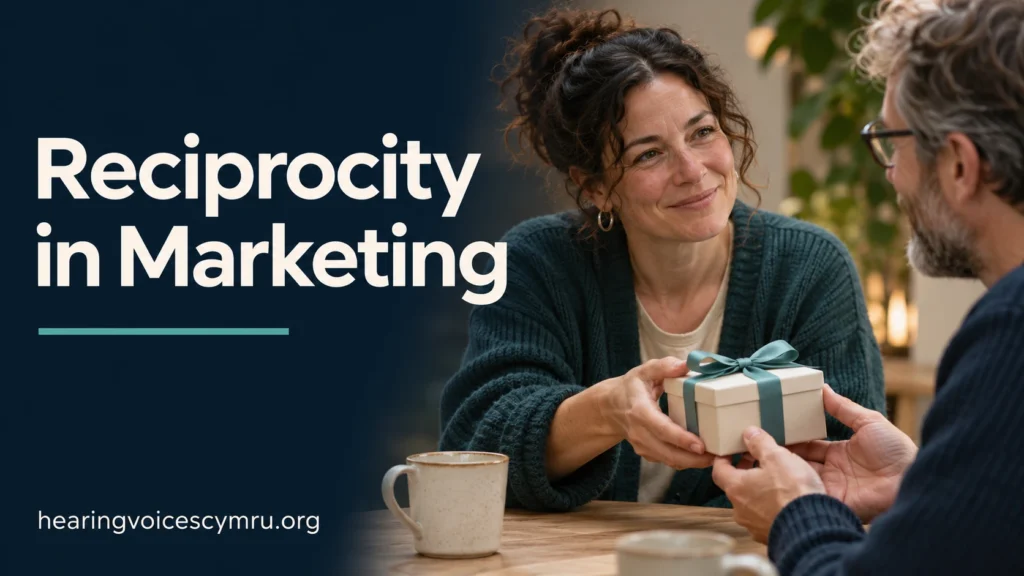
Short answer: Reciprocity is the instinct to return a favor. In marketing, giving genuine value first, through free samples, helpful content or great service, makes people more inclined to engage and buy.
Reciprocity is the deeply ingrained human tendency to return a favour. When someone gives us something, we feel a social obligation to give something back. Psychologist Robert Cialdini made reciprocity the first of his six principles of influence in his 1984 book Influence. In marketing, giving genuine value first, through free content, samples, tools or help, builds goodwill that makes people more likely to engage, trust and buy.
| Gift | Why it works | Tip |
|---|---|---|
| Free sample | Lets people experience value | Make it generous |
| Helpful content | Solves a real problem | No hard gating |
| Unexpected extra | Surprise boosts goodwill | Personalize it |
| Great service | People return favors with loyalty | Train for it |
Reciprocity marketing examples
- Free samples in supermarkets and beauty stores
- Helpful content such as guides, templates and calculators that solve a real problem
- Free trials and freemium plans
- Personal touches, such as a handwritten thank-you note in an order
- Unexpected extras, like a bonus gift or upgrade
- Generous customer service that goes beyond what is required
The research behind reciprocity
Studies of restaurant tipping found that servers who left a mint with the bill received higher tips, and that tips rose further when the gift felt personal. The lesson for marketers is that personal, unexpected and meaningful gifts trigger reciprocity far more than generic giveaways.
How to use reciprocity well
- Give first, without immediately asking for something in return
- Make the value genuine; a gated PDF of thin content can backfire
- Personalise where you can
- Keep the “ask” proportionate to what you gave
- Avoid manipulative tactics that create guilt or pressure
Reciprocity vs bribery
Reciprocity works because it feels like a genuine gift. When a “free” item is obviously conditional, such as a download that requires a long form and triggers a hard sales call, people sense the transaction and the goodwill disappears. The most effective reciprocity strategies give something useful with no strings attached and trust that a share of people will come back when they are ready.
Measuring the impact of reciprocity
- Return visits to helpful content such as guides and tools
- Email sign-ups that happen after someone has already received value
- Brand searches, which tend to grow as more people recognise a brand that helped them
- Referrals and reviews, which are a form of customers reciprocating good service
Over time, reciprocity compounds. Helpful brands earn trust, trust earns attention, and attention makes every other marketing activity more effective.
Reciprocity in health and mental health marketing
For clinics, therapists and charities, reciprocity often means publishing genuinely helpful, accurate information that helps people understand their situation, whether or not they ever become clients. That is the approach behind ethical content marketing, explained in our guide on how to market mental health services. Reciprocity sits alongside other cognitive biases in marketing such as social proof and the halo effect.
Related reading
Explore more marketing psychology guides on the Hearing Voices Cymru homepage.
Our take
Reciprocity only works when the gift is real. A “free” guide locked behind a long form followed by a pushy sales call is not a gift; it is a trade. In our view, the brands that win with reciprocity are those willing to help people who may never buy.
Frequently asked questions
It is the principle that when a brand gives customers genuine value first, such as free content or samples, people feel inclined to return the favour by engaging or buying.
Robert Cialdini described reciprocity as one of six principles of persuasion in his 1984 book Influence.
Free samples in shops, helpful free guides and tools, and unexpected gifts with orders are common examples.