
How Interior Design Affects Mental Health
Interior design affects mental health by influencing stress levels, mood, focus, emotional regulation and overall wellbeing. Factors such as lighting, colour, layout, noise, clutter and sensory balance directly impact how the brain responds to an environment. Well-designed spaces can promote calm, safety and clarity, while poorly designed environments may contribute to anxiety, fatigue and emotional overwhelm.
Understanding how interior design affects mental health helps individuals, families, workplaces and healthcare providers create spaces that actively support psychological wellbeing rather than quietly undermine it.
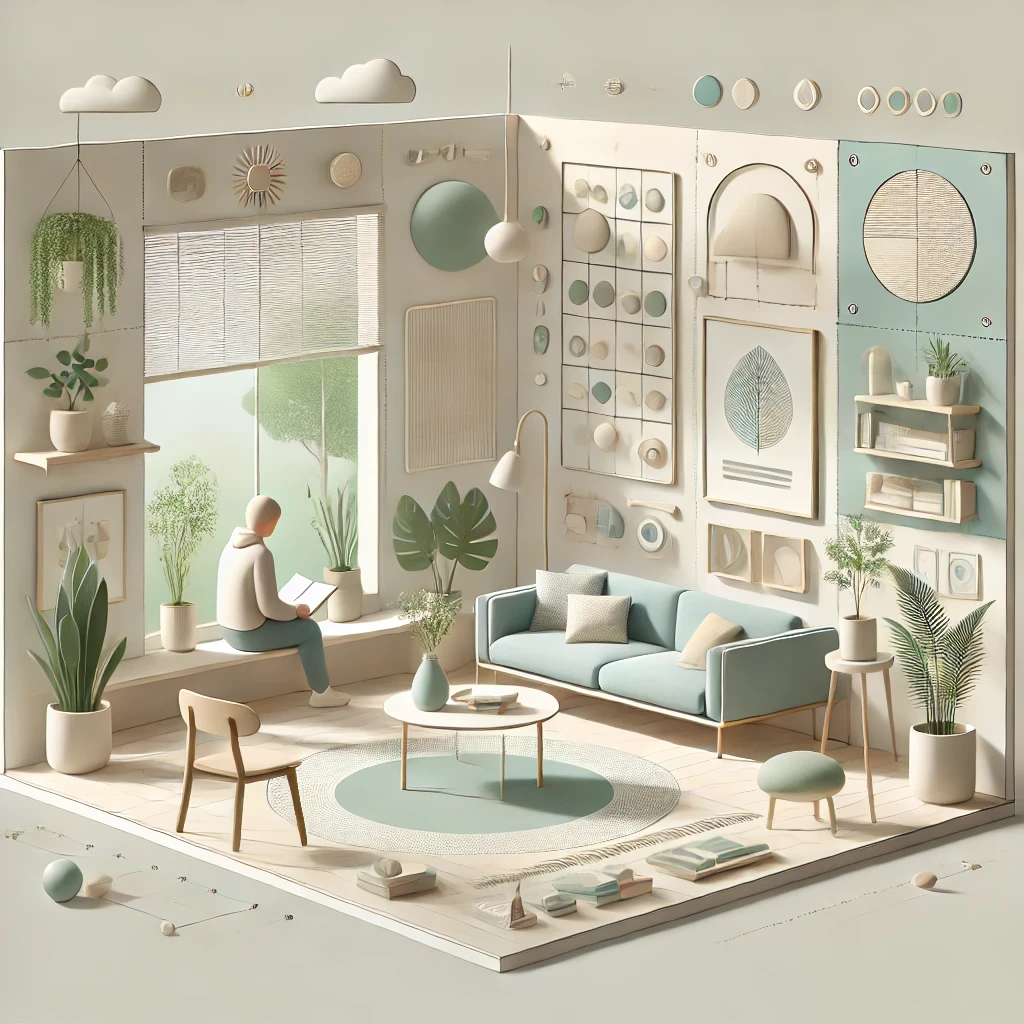
The Link Between Interior Design and Mental Health
Human beings are deeply shaped by their surroundings. Environmental psychology shows that physical environments influence emotional states, cognitive performance and stress responses. When a space feels chaotic, noisy or visually overwhelming, the nervous system remains on high alert. Over time, this prolonged stimulation can increase anxiety, irritability and mental exhaustion.
By contrast, environments designed with balance, comfort and predictability support emotional regulation. Interior design that prioritises mental health creates a sense of control, safety and ease, which are fundamental psychological needs.
How Colour in Interior Design Affects Mental Health
Colour plays a major role in how a space feels emotionally.
Soft, neutral and natural tones tend to promote calm and stability. Blues and greens are commonly associated with relaxation and focus, while earth tones create warmth and grounding. In contrast, very bright, highly saturated or clashing colours can overstimulate the brain, particularly for people who experience anxiety, sensory sensitivity or stress.
Interior design and wellbeing are closely connected through colour choice. Selecting colours that align with the purpose of a space helps regulate emotional responses and supports mental comfort.
Lighting and Mental Wellbeing
Lighting has a direct effect on mental health, sleep and mood regulation.
Natural light supports circadian rhythms, improves sleep quality and helps regulate serotonin levels. Spaces with limited daylight are often associated with lower energy, reduced concentration and poorer emotional wellbeing. Harsh artificial lighting, glare and flickering lights can increase mental fatigue and stress.
Interior design that supports mental health prioritises access to daylight, uses warm ambient lighting and allows for flexibility. Adjustable lighting helps people adapt their environment to different emotional and functional needs throughout the day.
Space, Layout and Psychological Safety
The layout of a space affects how safe and manageable it feels.
Crowded rooms, blocked pathways and poorly defined areas can create a sense of tension and restlessness. Clear layouts with defined zones reduce cognitive load and help the brain process the environment more easily. Open, breathable spaces with logical movement patterns support psychological comfort.
Designing spaces for mental health often means prioritising flow, personal space and ease of movement rather than filling rooms with unnecessary furniture or visual noise.
Clutter, Organisation and Mental Clarity
Clutter has a measurable psychological impact. Visually busy environments require constant processing, which increases cognitive fatigue and stress. Research suggests cluttered spaces are linked to feelings of overwhelm, reduced focus and emotional strain.
Interior design that supports mental health focuses on intentional organisation, adequate storage and visual simplicity. Reducing clutter is not about aesthetics alone; it helps calm the nervous system and supports clearer thinking.
Noise, Acoustics and Sensory Overload
Sound is a powerful but often overlooked factor in interior design and mental health.
Constant background noise, echoes or unpredictable sounds can increase stress and reduce concentration. Poor acoustics may make spaces feel chaotic or unsafe, particularly for people with anxiety, trauma histories or sensory sensitivities.
Design choices such as soft furnishings, rugs, curtains and acoustic panels can significantly reduce sensory overload and create a more emotionally supportive environment.
Interior Design in Mental Health and Healthcare Settings
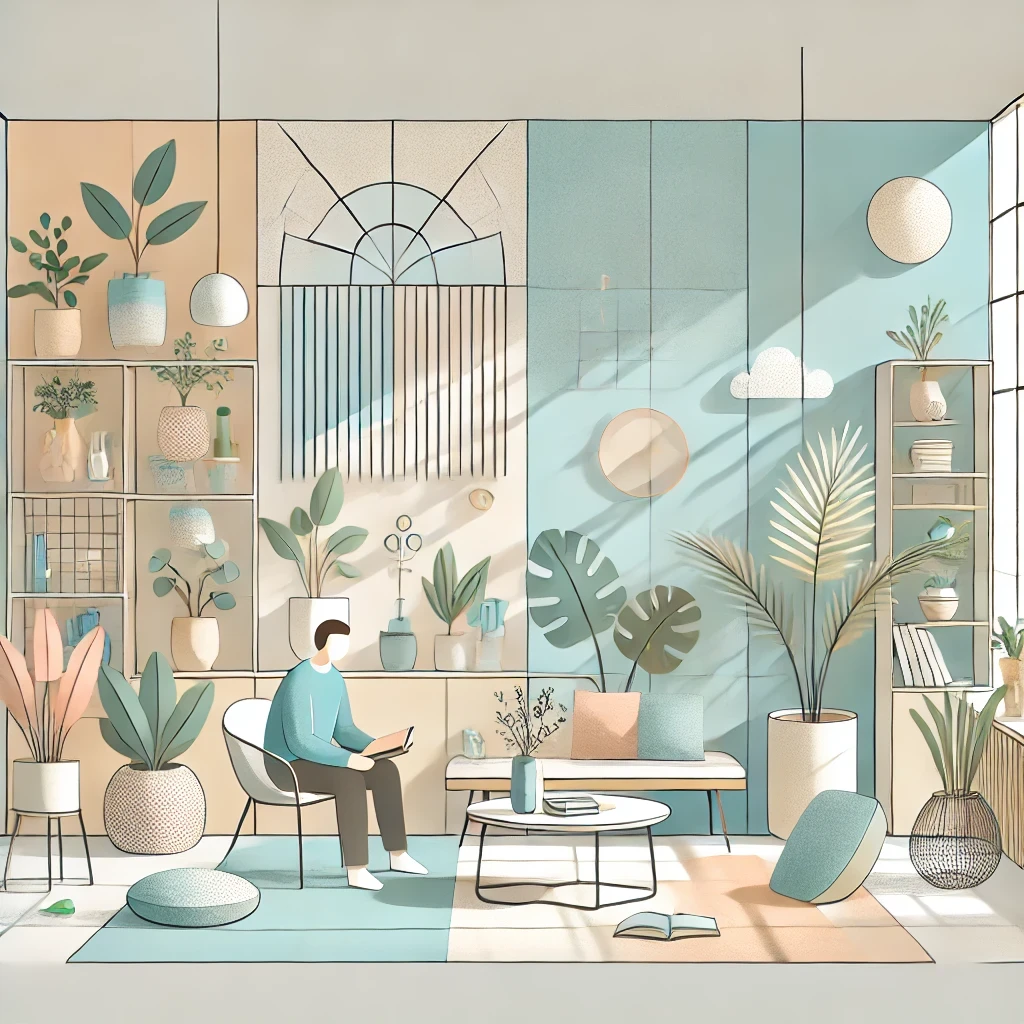
Interior design plays a critical role in therapy practices, counselling rooms and mental health clinics. Spaces that feel welcoming rather than clinical help clients feel safer, calmer and more open during sessions.
Calming colours, soft lighting, comfortable seating and sound control can reduce anxiety and support therapeutic engagement. For healthcare environments, interior design becomes part of care itself, influencing how people experience treatment and support.
Practical Interior Design Tips for Better Mental Health
Small design changes can make a meaningful difference to mental wellbeing:
- Maximise natural light where possible
- Use calm, neutral colour palettes
- Reduce clutter and visual distractions
- Create defined zones for rest, work and relaxation
- Incorporate natural elements such as plants or wood
- Avoid harsh lighting and excessive noise
Interior design that supports mental health focuses on function, comfort and emotional experience rather than trends.
How Interior Design Supports Everyday Wellbeing
You don’t need a full renovation to benefit from mental health–focused interior design. Simple adjustments like improving lighting, rearranging furniture, decluttering or creating a quiet corner can support emotional balance.
Mental health and interior design intersect wherever people live, work or receive care. When spaces are designed intentionally, they restore energy instead of draining it.

FInterior Design Definitely Affects Mental Health
Interior design is not just about appearance. It shapes how the brain processes safety, stimulation and rest. Thoughtful design choices influence stress levels, mood, focus and emotional regulation every day.
By understanding how interior design affects mental health, individuals and organisations can create environments that support wellbeing, dignity and psychological comfort. When spaces align with human needs, they become places of restoration rather than sources of silent stress.
Go To Hearing Voices CYMRU