
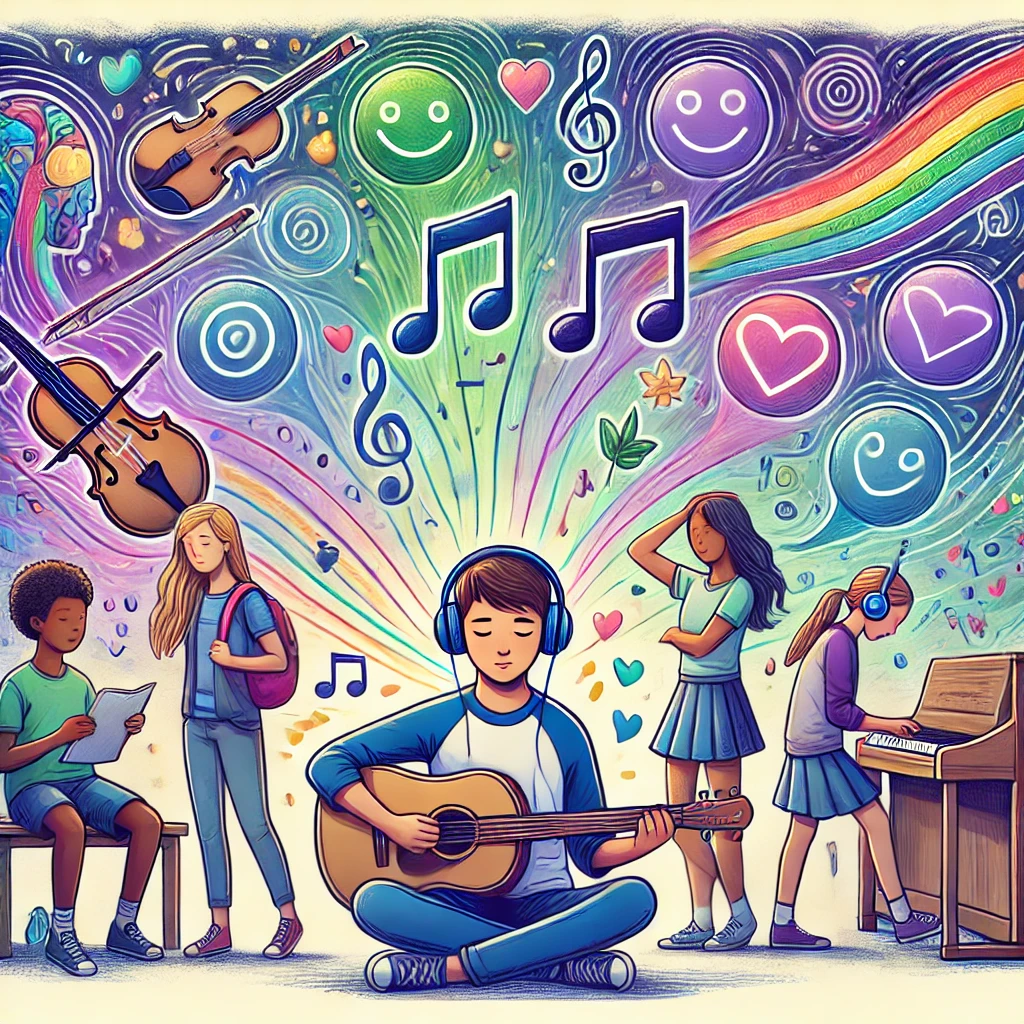
Music weaves itself into nearly every corner of middle school life. Between shifting emotions, identity exploration, academic pressure, and new social dynamics, students often turn to music as a steady emotional anchor. Understanding how music affects middle schoolers’ mental health helps parents and educators support healthier habits and emotional growth.
Why Music Matters in Early Adolescence Mental Health
Middle school is a developmental crossroads. Students experience rapid mood changes, greater awareness of social expectations, and early stress related to academics, friendships, and self-esteem. Music becomes a personal sanctuary that helps them navigate these internal and external pressures. It offers emotional release, connection, and even structure during a time that feels unpredictable.
Music as a Tool for Emotional Regulation
Music directly influences the brain’s reward and emotional-processing centers. This makes it one of the easiest and most accessible tools for emotional regulation during adolescence.
How Music Helps Regulate Mood
Many middle schoolers use music intuitively to change how they feel. Calm music can ease anxiety, while upbeat songs often bring motivation or relief. When used in balance, students gain healthier emotional control, reduced stress, and better mood awareness.
Semantic triple: music supports emotional regulation by shaping mood responses.
Improving Focus Through Music
Soft background music, especially instrumental tracks, can help students concentrate during homework or studying. It reduces environmental distractions and keeps the mind gently anchored to the task.
Music and Identity Development
Middle schoolers begin forming a stronger sense of self, and music becomes one of the earliest and clearest ways they express that identity.
Music as a Mirror
Students often explore who they are by exploring what they like. Their playlists communicate personality, values, and curiosity. This internal exploration helps them build self-confidence and personal identity.
Peer Connection Through Music
Sharing songs, discovering new artists, and bonding over genres gives students a sense of belonging. These musical friendships strengthen social well-being and reduce feelings of isolation.
Semantic triple: music genres influence peer relationships by shaping shared identities.
Music’s Role in Reducing Mental Stress and Anxiety
Research consistently shows that slow tempos, predictable rhythms, and soothing harmonies calm the nervous system. Middle schoolers benefit from reduced heart rate, lower cortisol levels, and increased emotional stability. This effect is especially helpful during test weeks, social challenges, or moments of overwhelm.
Music as a Safe Emotional Outlet
Listening to music gives students a safe way to release tension without having to articulate their feelings. This makes it an emotional valve that prevents internal buildup.
Benefits of Learning or Making Music
Participating in music—choir, orchestra, band, or digital production—strengthens both academic and emotional skills.
Building Discipline and Resilience
Learning an instrument teaches focus, patience, and persistence. Students learn to manage frustration and celebrate small victories, which improves their overall mental resilience.
Boosting Self-Esteem
Performing or creating music gives a sense of accomplishment. Students become more confident in their abilities and more willing to express their emotions.
Semantic triple: music education enhances self-esteem by supporting skill development.
When Music Can Negatively Affect Middle Schoolers’ Mental Health
Not all listening patterns support well-being. Some can unintentionally intensify negative emotions.
Overexposure to Sad or Aggressive Music
If a student repeatedly listens to depressive or angry music while already feeling low, the emotional weight may amplify their sadness or irritability. This doesn’t mean these genres are harmful by nature; it means context and repetition matter.
Using Music to Avoid Stress
When students use loud music to block out emotions rather than process them, it can become an unhealthy coping strategy. Avoidance prevents them from learning how to manage stress effectively.
Disrupted Sleep
Playing intense or fast-paced music at night can interfere with rest. Poor sleep affects mood regulation, attention, and overall mental health, making musical habits before bed especially important to monitor.
How Adults Can Guide Healthy Music Habits
Parents and educators play a subtle but powerful role in shaping how students use music.
Encourage a Healthy Variety
A balanced playlist exposes students to different moods, rhythms, and emotional textures. Variety reinforces flexible emotional responses.
Discuss Lyrics and Feelings
A simple conversation about how certain songs make them feel helps students become more aware of how music influences their mood.
Promote Music Creation
Encouraging students to learn an instrument or try digital music tools gives them an expressive outlet and boosts confidence.
Set Gentle Boundaries
Guidance around volume, nighttime listening, and emotional patterns helps students use music in a healthier, more intentional way.
Summary of How Music Affects Middle Schoolers’ Mental Health
Music enhances emotional regulation, reduces stress, supports identity exploration, and strengthens social bonds. Learning or creating music improves confidence and cognitive skills. However, overuse of emotionally heavy music, avoidance habits, or poor nighttime listening can negatively affect mental health.
If you want, I can expand this into a classroom worksheet, a parent-focused guide, or a version optimized for a specific reading level.
Go To Hearing Voices CYMRU