
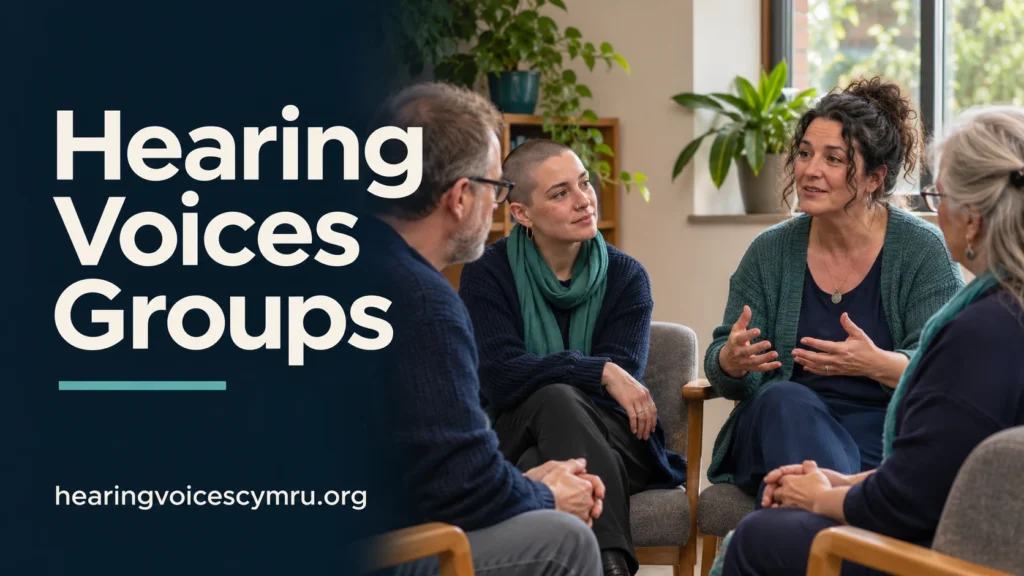
Short answer: Hearing voices groups are free peer support groups where people who hear voices share experiences and coping strategies without judgement. They grew out of the hearing voices movement that began in the Netherlands in the late 1980s.
Hearing voices groups are peer support groups where people who hear voices, see visions or have similar experiences meet to share what they go through and how they cope. They are run on the principle that voices are a meaningful human experience, and that people who hear them are the experts on their own lives. Groups exist in many countries and can complement, rather than replace, medical care.
| Feature | Hearing voices group | Clinical treatment |
|---|---|---|
| Led by | Peers with lived experience | Health professionals |
| Diagnosis needed | Usually no | Often yes |
| Focus | Sharing, coping, meaning | Symptom reduction |
| Cost | Usually free | Varies |
| Best used | Alongside other support | For assessment and crisis care |
Where hearing voices groups came from
The groups grew out of the Hearing Voices Movement, which began in the Netherlands in the late 1980s when psychiatrist Marius Romme and researcher Sandra Escher started working with voice hearers who were coping well with their experiences. Their work showed that many people hear voices without needing psychiatric care, and that how a person relates to their voices matters as much as the voices themselves.
The idea spread quickly: the first Hearing Voices Network was founded in 1988, and groups soon followed worldwide. Today the international movement is supported by Intervoice, a London-based charity that connects national networks and promotes a hopeful, rights-based approach to hearing voices.
What happens at a hearing voices group?
- Sharing experiences in a safe, confidential space, without needing to prove or explain them
- Swapping coping strategies that have worked for others
- Exploring the meaning of voices, if people want to, rather than only trying to eliminate them
- Mutual respect: members can accept any explanation for their voices, whether medical, psychological, spiritual or cultural
Groups are usually facilitated by people with lived experience, sometimes alongside a supportive professional. There is normally no requirement to have a diagnosis, and most groups are free.
Do hearing voices groups help?
Members often report feeling less isolated, less ashamed and more in control of their voices. Hearing others describe similar experiences can reduce fear and stigma, and learning practical techniques, from distraction to talking back to voices, gives people more options. Groups work best alongside other support, such as a doctor, therapist or community mental health team.
How to find a group
- Check the national hearing voices network in your country through Intervoice
- Ask your doctor, community mental health team or local mental health charity
- Look for online groups if there is nothing local, many now meet by video
- Read our guides on why people hear voices and psychosis symptoms before your first meeting
Need urgent help? In the US, call or text 988 to reach the Suicide & Crisis Lifeline, or call 911 in an emergency. Elsewhere, contact your local emergency number or crisis line.
Related reading
Explore more hearing voices and psychosis guides on the Hearing Voices Cymru homepage.
Our take
We think hearing voices groups are one of the most underused resources in mental health. They cost little, they reduce shame, and they put lived experience at the center. They are not a replacement for clinical care in a crisis, but every health service should be signposting to them.
Frequently asked questions
It is a peer support group where people who hear voices or have similar experiences share their experiences and coping strategies in a safe, non-judgemental space.
Usually not. Most groups welcome anyone who hears voices, sees visions or has similar experiences, whatever explanation they have for them.
It began in the Netherlands in the late 1980s through the work of psychiatrist Marius Romme and researcher Sandra Escher, and spread worldwide.
This article is for general information only and is not medical advice. Speak to a qualified health professional about your own situation.